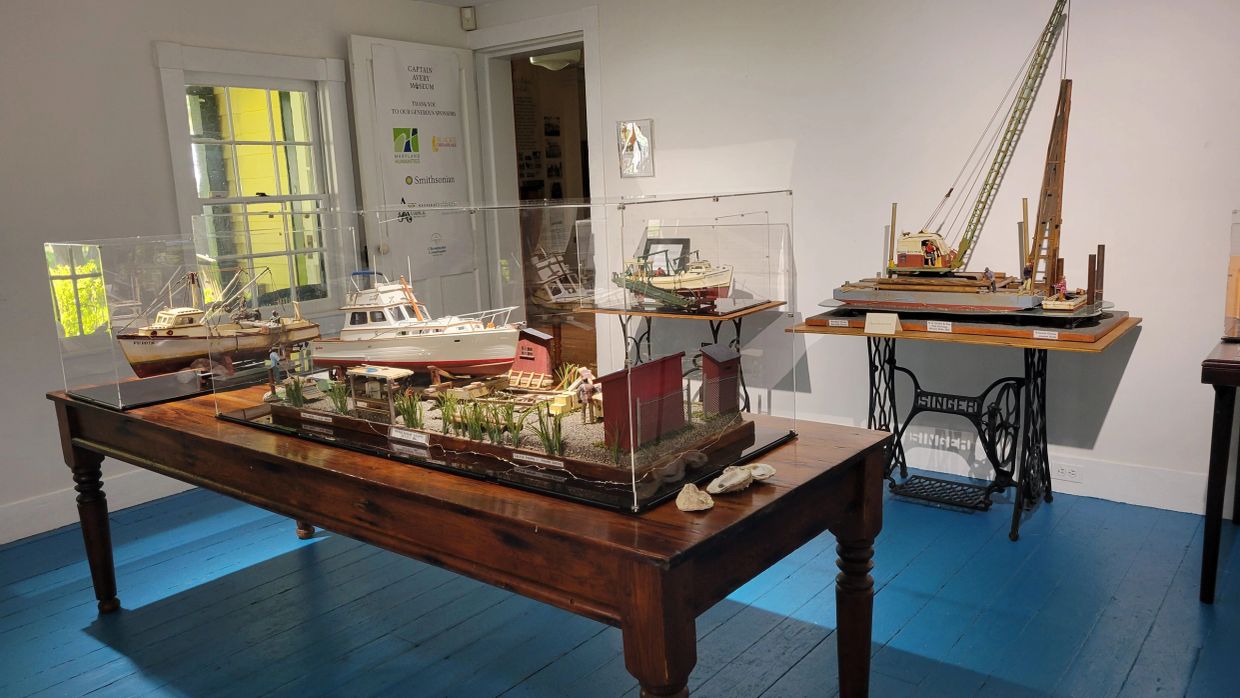
12 Model Workboats 2011 - 2024
Purchase was made possible by a generous grant from the Arts Council of Anne Arundel County
Norman Frank Gross was born in 1959 in Annapolis, Maryland. One of five children, he grew up in Shady Side in a family of watermen and maritime workers. As his elders aged, he realized an era was passing and he wanted to memorialize his family's legacy and the way of life that provided many in the Shady Side Peninsula with livelihoods based on the Bay’s bounties. A self-taught artist and maritime worker, Gross was inspired to use the slower winter months to build these models that portray life on the water.
The boats are shown in use with scenes populated by Gross's family members and pets, and are enlivened with miniature oyster shells, crab pots, and even smaller details such as drink cans and cigarette packs. As a collection, the models depict memories of work and play on the Bay and present a comprehensive picture of Shady Side maritime life in the mid to late 20th century.
The boats are largely constructed from balsa wood and were built plank by plank, duplicating the construction of the actual boats as closely as possible. Materials used include weathered wood for pier decking, aluminum welding rods for boat railings, and sawn and polished Lexan sheets for water. Gross cut apart GI Joes and other small toys to create the figures, epoxying heads, arms and legs into desired positions before adding clothing and painstaking painted details.
The audio commentaries that accompany each piece are available only onsite and are based on a transcribed interview with Norman Gross and Captain Avery Museum Director, T.C. Magnotti in 2021, and additional discussion between Mr. Gross and Board Member Peggy Oriani in 2025. The scripts were edited for clarity and understanding.
Original source material is available for research purposes upon request.

Audio production supported by grants from the Arts Council of Anne Arundel County and Chesapeake Crossroads Heritage area.
Produced by Ridgeback Comunications and voiced by Reuben J. Tapp.